
Table of Contents
Every competitive game with distinct roles runs into the same problem: players treat all tier lists as if they measure the same thing. Open any ranking page, look at where your main lands, and either feel vindicated or annoyed. The actual logic behind how those rankings were built — what data went in, what the list is optimized for, why DPS rankings and tank rankings can't be read the same way — gets skipped entirely.
That gap in understanding is where a lot of competitive players leave performance on the table. Not because they're playing the wrong characters, but because they're drawing the wrong conclusions from the rankings they're looking at.
What a DPS Tier List Is Actually Measuring
The most common mistake with DPS tier lists is treating them as a measure of raw damage output. They're not — or at least, the useful ones aren't. A DPS tier list is a measure of output in context: how much damage a character contributes under the specific conditions that the current meta creates, accounting for what enemies they're likely to face, what teamfight patterns dominate, and what the pace of the game rewards.
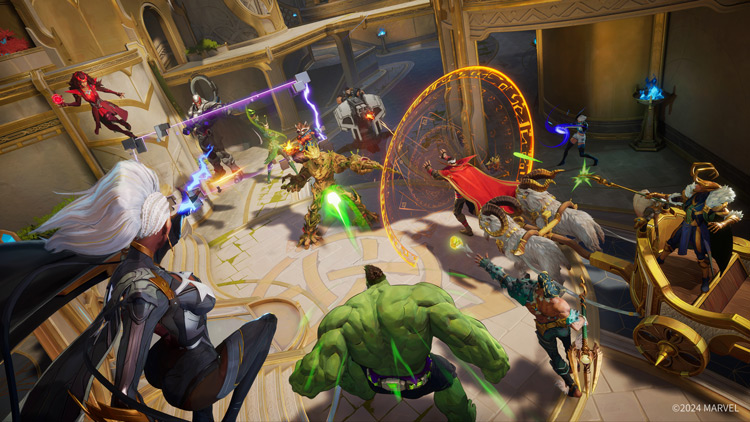
In Marvel Rivals, Duelist rankings shift when the meta shifts — not necessarily because any character's kit changed, but because the compositions around them changed. A Duelist who excels at single-target burst against isolated targets drops in value when the dominant team formats are built around grouped fights where AoE throughput matters more. The damage number didn't change. The value of that damage did.
The same principle applies anywhere competitive games rank their damage dealers. What makes any dps tier list meaningful isn't the raw position — it's whether the ranking accounts for the content it's being measured against. A character ranked A-tier in a fast-paced burst meta and B-tier in a sustained damage meta isn't inconsistent. It's the list working correctly.
This is why tier lists that try to give a single "all-situations" DPS ranking tend to be less useful than ones that contextualize the ranking. When you see a Duelist ranked higher in competitive play than in casual, it usually means their kit requires coordination to get full value from — the damage ceiling is higher, but so is the floor of execution needed to reach it.
Why Tank Rankings Follow Different Rules
DPS rankings weight output heavily because output is the primary function of the role. Tank rankings can't do that — tanks aren't optimized for damage, so ranking them by damage would miss most of what makes a tank good or bad in a given meta.
Vanguard rankings in Marvel Rivals reflect a different set of considerations: how much damage a tank can absorb and for how long, what crowd control they bring, how well their kit protects allies rather than themselves, and whether their cooldown profile lines up with the teamfight patterns they'll face. Two tanks can have similar survivability numbers and play completely differently in practice because one is passive-mitigation heavy and the other is active-cooldown dependent. That distinction matters enormously in how your team plays around them.
A tank with passive mitigation coasts through sustained damage but can be burst down in high-spike fights if the team doesn't cover them. A tank with strong active cooldowns can shut down a teamfight moment entirely — but requires tighter communication to deploy effectively. Neither is universally better. The meta determines which profile the current game state rewards.
The midnight tank tier list approaches rankings the same way: tanks are evaluated on mitigation profiles, group utility, mobility, and how their cooldown availability matches the content's damage patterns. A tank that's S-tier in one encounter structure can drop significantly when the fights change, not because anything was nerfed, but because the encounters now reward a different defensive profile. Understanding that is what separates players who use a tank tier list from players who just look at it.
How to Use Both Rankings Together
DPS and tank rankings answer different questions. The DPS tier list answers: which damage dealers produce the most value under current meta conditions? The tank tier list answers: which frontlines provide the right defensive and utility profile for the content you're running?
The mistake is optimizing for one in isolation. A team built around the highest-ranked Duelists without considering what Vanguard enables those Duelists will run into composition problems that raw damage can't solve. Equally, a defensively optimized frontline with damage dealers who don't fit the pace the tank creates produces mismatched timing — one side of the team is ready to fight before the other.
The cleaner approach is to use both lists to identify what profiles you need, then build toward them. If the current meta rewards sustained grouped fights, you want Duelists with AoE throughput and a Vanguard whose mitigation holds up under prolonged pressure. If the meta is burst-oriented and fast, you want different profiles on both ends.
Neither list tells you what team to run. Together, they tell you what kind of team the meta currently rewards — which is a more useful question.
The Underlying Logic Is the Same Across Competitive Games
Role-based tier lists work on the same principle whether you're playing Marvel Rivals, a MOBA, or a competitive PvE game. The ranking tells you how well a character or spec performs the core function of their role under current conditions. The conditions change. The ranking changes. The logic doesn't.
Players who understand that adapt faster when the meta shifts, because they already know what changed and why. Players who treat the ranking as fixed lose a session figuring out why their character suddenly feels worse before they realize the conditions around it changed.
Read the list. Understand what it's measuring. Build around both roles, not just one. That's the full picture.