
Table of Contents
Esports is constantly evolving, offering players fresh disciplines with unexplored mechanics. Many want to jump on the bandwagon and become pioneers in a newly released project. Reaching a professional level in a new environment requires cold calculation, rather than simple luck or endless grinding. In this text, I will share my vision of what the roadmap from a regular amateur to a top-tier player should look like. This path consists of several key stages, and ignoring them almost always leads to stagnation.
Early Start and Analytical Approach
The emergence of a new competitive game is always chaos, where the one who adapts to unknown conditions faster wins. In the first months after the release, the meta is completely unformed, and raw mechanical skill often gives way to cold calculation. Most users rush to mindlessly press buttons, trying to outshoot or outplay opponents based purely on reflexes. The true potential, however, is revealed by those who sit down to study basic mechanics, animation timings, and non-obvious interactions between in-game elements.
An analytical approach allows you to build structure where others see only randomness. Understanding the macro game requires strict discipline and constant gathering of information about enemy actions on the map. If you analyze matches at major tournaments, such as the upcoming cs2 major 2026, you can clearly notice the dominance of tactics over pure mechanics. The best teams win through map control, calculated economy, and smart rotations, not just thanks to perfect aiming. In fresh releases, this principle works even more sharply, as taking the right position in time brings victory long before a direct clash.
To implement this approach, it is necessary to spend a significant amount of time outside the matches themselves. Carefully studying every point in the patch notes, thoroughly analyzing your own demo recordings, and tracking mistakes become a mandatory routine. The main goal is to find unconventional solutions, effective combinations, and mechanics that developers haven't balanced yet. It is exactly these analytical discoveries at the start that shape the future professional scene and allow you to secure your positions on the leaderboards.
Focus on Fundamental Mechanics
Any new esports title relies on fundamental principles familiar to the industry. If we abstract away from visual effects and lore, I see a set of basic mechanics migrated from established genres. Transferring this experience is the main trump card at the start. A prime example is Valorant's launch, where leaderboards were instantly occupied by veterans of other tactical shooters. Their success was dictated by already solid aim, proper positioning, and map geometry understanding, not by knowing new agents' abilities.
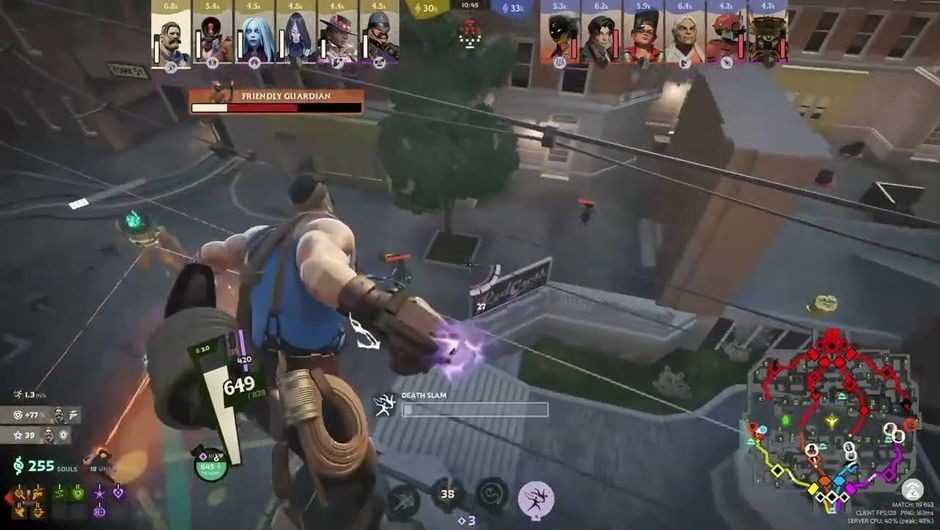
Today, the trend of genre blending intensifies, making the adaptation of old skills even more relevant. A vivid example is Deadlock, a complex hybrid of a MOBA and a team shooter. Here, it is not enough to just shoot well or gather resources separately. To claim high ranks, one must combine the lane control macro-skills of League of Legends with the dynamics and ability timings of Overwatch. Without a solid foundation in at least one of these, a player quickly hits an invisible wall.
Consequently, the primary task for reaching the pro level in an unfamiliar environment is to precisely extract the basic mechanics of a specific project. It is necessary to define what brings victory: holding key map points, calculated economy, or strict neutral objective control. My position is that these isolated elements must be methodically brought to complete automatism. Only after this individual foundation is laid does it make sense to move on to complex team interactions and character synergy.
Networking and Finding a Team
As I see it, solo players rarely achieve significant success in team esports, no matter how mechanically talented they are. The illusion that a high personal rating automatically opens doors to the big stage ruins many newcomers. In fresh projects, competitive communities form rapidly within the first weeks. It is critical to surround yourself with players focused on team results. For example, early Apex Legends tournaments were won by well-coordinated trios who distributed roles during closed testing, not by randomly assembled shooters.
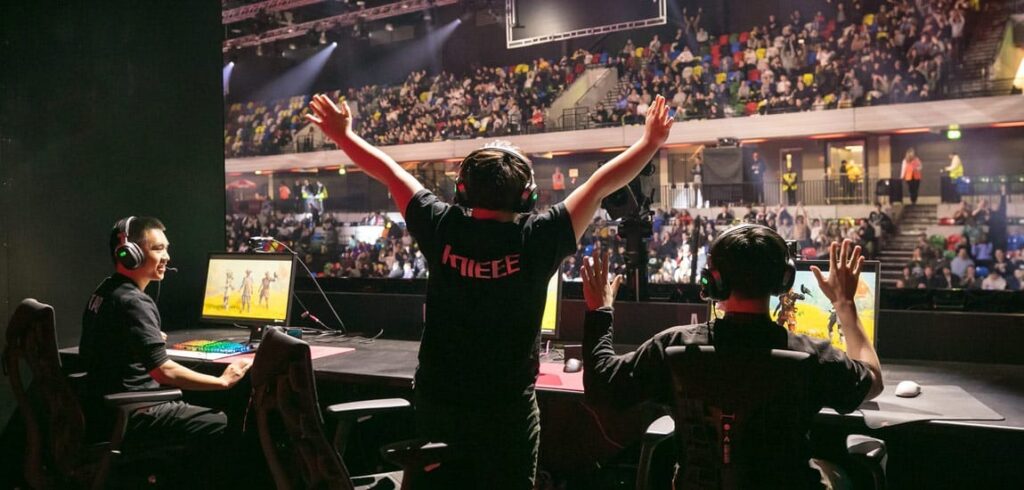
Building these connections requires maximum proactivity. You should purposefully search for closed Discord channels and specialized platforms. Constantly look for stacks to play practice matches and local tournaments. Do not be afraid of rejection; boldly offer your candidacy to better teams to quickly adopt their timings and macro-understanding. In Valorant, many current professionals started their journey exactly by asking to play as stand-ins for experienced veterans, expanding their network.
During joint practice, communication skills inevitably come to the forefront. Clear communication, composure, and the ability to work with constructive feedback are valued by captains just as much as dry statistics. An in-game leader will always prefer a disciplined teammate who provides clear information over a toxic individualist. Rosters formed on mutual respect and constant work on mistakes are the first to attract scouts and get signed by major organizations.
Adaptability to Updates
Developers of new esports titles release patches frequently to find optimal balance, radically changing the competitive scene without warning. What consistently brought victories yesterday might be completely useless after the next update. In my opinion, surviving these unstable conditions requires calmly accepting new rules and seeking non-obvious advantages, rather than freezing when a favorite item or key location is nerfed.
A professional approach requires absolute flexibility and a constant readiness to relearn. This means avoiding strict attachment to a single character, class, or weapon. Limiting your hero pool makes you a hostage to the meta and a vulnerable link for your team. For example, in the early stages of Overwatch, teams heavily reliant on one player mastering a specific hero quickly lost their positions after a nerf. Playing effectively across different roles provides essential tactical freedom.
Apex Legends in its early seasons perfectly illustrates this principle. As developers regularly reshaped loot pools, armor mechanics, and map rotations, only rosters capable of rebuilding their entire setup within days stayed afloat. I believe this speed of adaptation is what separates tier-1 athletes from strong amateurs. Constantly testing altered recoil or new ability ranges after every patch is the basic routine that guarantees survival in a volatile competitive environment.
Conclusion
Achieving professional status in a recently released game is a marathon that requires strict discipline and constant self-analysis. It is not enough to simply press buttons a lot; you need to structure your training process smartly and systematically. A focus on analytics, a solid mechanical base, the right connections in the community, and the ability to adapt to a changing balance form the very foundation for a successful career. It is a complex and methodical process, but this is exactly what distinguishes future esports athletes from simple enthusiasts.