
Table of Contents
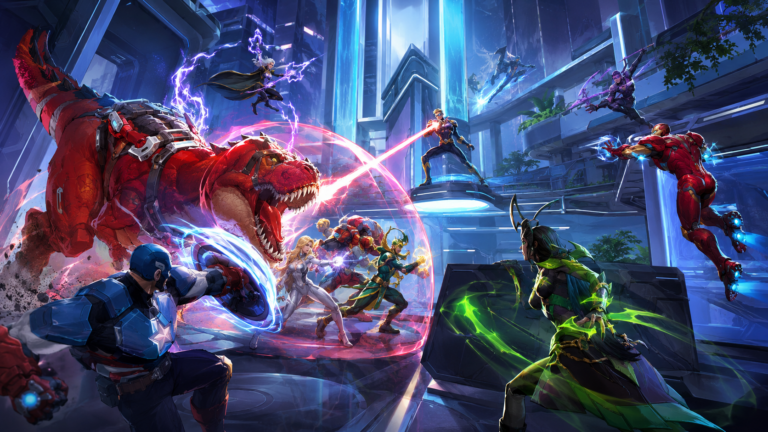
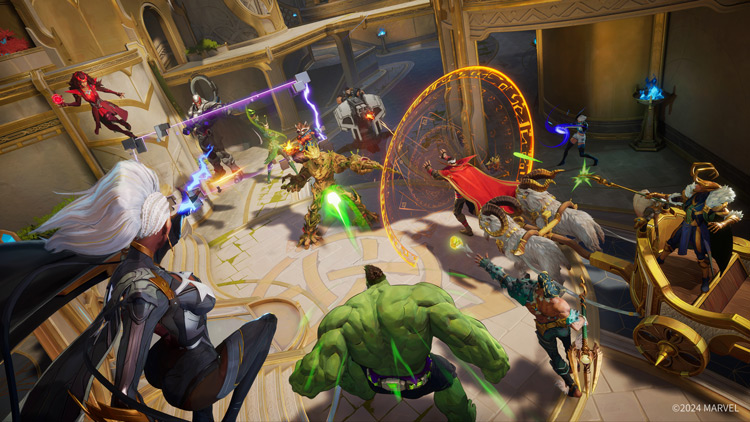
When Marvel Rivals' Season 8 launched last week with Devil Dinosaur, a new battle pass, weekly cosmetic drops, and a Hide and Seek event, almost no one paused to ask where any of that came from. Daily missions. Time-limited rewards. Tiered progression. A premium pass that "never expires" once purchased. These are now the default mechanics of every live-service game on the market — so default that they feel like they've always existed.
They haven't. And the design lineage doesn't start where most people think it does. It doesn't start with Fortnite, or Destiny, or even World of Warcraft. The clearest ancestor of the modern battle pass — the seasonal cadence, the daily login loop, the limited-time event pass that disappears in two weeks — was being run at industrial scale in European online gaming long before any hero shooter shipped a single skin. The retention systems Marvel Rivals players grind through every Tuesday were stress-tested somewhere else first, on a much larger user base, with regulators watching.
This isn't a value judgment. It's a design observation. And it's worth understanding, because once you see the pattern, you can't unsee it in any live-service game you play.
The Mechanics That Came First
Long before "live service" was a phrase, European online operators were solving the same problem modern game studios face: how do you bring someone back tomorrow, and the day after, and the day after that, when there's no story to finish and no credits to roll?
Their answers, refined across two decades of A/B testing on millions of users, included:
- Daily login rewards — a small, escalating prize for showing up every day, with the streak resetting if you skip
- Time-limited bonus events — a "Christmas promo" or "weekend reload" that vanished if you didn't claim it
- Tiered loyalty programs — bronze, silver, gold, VIP, each with progressively better perks and a visible bar showing how close you were to the next tier
- Seasonal cosmetic theming — Halloween skins, Lunar New Year reskins, Valentine's events, all on a calendar that mirrored the retail year
- Variable-ratio reward schedules — the slot reel itself, which is the cleanest implementation of intermittent reinforcement ever shipped to consumers
Read that list again with a hero shooter in mind. Daily missions. Limited-time event passes. Battle pass tiers. Lunar New Year skins. Loot-box-style "drops" with rare cosmetic pulls. Every single mechanic transferred — almost untouched — from one industry to the other.
The European online gaming sector wasn't the only laboratory for these ideas. Mobile free-to-play games in Asia, particularly in South Korea and Japan, ran parallel experiments through the 2000s. But the European operator stack is where the retention math was published and refined first, because regulators required it.
This is worth slowing down on, because it's the actual mechanism of transfer. European online casinos — running under licensing regimes like the Malta Gaming Authority, the UK Gambling Commission, and the Curaçao eGaming authority — were the most heavily instrumented consumer-engagement products of the 2010s. Operators had to document return-player rates, session length, average bet, bonus clearance ratios, and wagering compliance in ways that game studios never had to. Welcome bonuses with tiered deposit matches, weekly cashback structures, loyalty VIP ladders running from bronze to diamond, free-spin promotions tied to specific titles — every mechanic was tracked, optimized, and reported. The European online casino market sits well above €100 billion in gross gambling revenue, according to Europeangaming, which tracks the operator landscape across MGA, UKGC, and EU-licensed jurisdictions. That scale is what made the playbook visible: when retention systems run on millions of users with mandatory disclosure, the patterns become knowable. Game designers paying attention to engagement loops had a public-facing laboratory to learn from, even if no one talked about it that way.
How the Transfer Actually Happened
The bridge wasn't direct. No one at a major studio sat down with a casino retention dashboard and copied it line-by-line. The transfer happened through three channels.
Mobile free-to-play in the early 2010s. Games like Candy Crush Saga, Clash of Clans, and Puzzle & Dragons borrowed engagement mechanics from both casino-adjacent products and Japanese gacha titles. They mainstreamed the daily-login loop, the energy-recharge timer, and the limited-time event format for a Western audience. By 2014, every mobile game on the App Store top-grossing chart used some variation of these systems.
Fortnite's battle pass in 2018. Epic Games didn't invent the battle pass — Dota 2 ran a "Compendium" with similar mechanics in 2013, and various Asian MMOs had season passes before that. But Fortnite made the model culturally inescapable. A €10 pass, a 100-tier progression bar, a season that ended in 90 days. The structure was a direct descendant of tiered loyalty programs and seasonal promo calendars, repackaged for a teenage shooter audience.
The shooter convergence around 2020. Call of Duty: Modern Warfare, Apex Legends, Valorant, and eventually Marvel Rivals all adopted near-identical battle pass structures. By the time NetEase shipped the Chronovium Battle Pass for Marvel Rivals' Season 0, the template was so established that players didn't need a tutorial. They already knew what a luxury tier was. They already knew what daily missions did. The mental model had been pre-installed by a decade of exposure to the same loop in different wrappers.
Where Marvel Rivals Sits in the Lineage
Marvel Rivals is, in many ways, a very polite implementation of these mechanics. The Luxury Battle Pass costs 990 Lattice (around $10), it never expires once purchased, and the pass actually returns most of its Lattice cost in rewards if you complete it. There's no fear-of-missing-out timer pushing you to spend. Skins are cosmetic. There are no loot boxes in the gambling-mechanic sense. The free tier is genuinely substantial.
But the underlying design DNA is still there, and it's worth naming honestly:
- Daily missions create a session-frequency obligation. Skip a day, lose Chrono Tokens, fall behind the curve.
- Event passes run concurrent with the main battle pass, layering a second time-pressure on top of the first.
- Seasonal cadence — Season 8 launched May 15, Season 8.5 arrives June 12 — keeps the content cycle short enough that absence feels costly.
- Rerun passes (the Flower of Krakoa rerun during Season 7.5, for example) borrow directly from the "limited-time return promotion" pattern that European operators have run for twenty years.
None of this is bad. The Marvel Rivals implementation is one of the more player-respecting versions of the formula. But understanding where the formula came from changes how you experience it.
The Cultural Conversation Catching Up
Europe has been the regulatory front line of this conversation for the last decade. Belgium banned paid loot boxes in 2018, classifying them as games of chance. The Netherlands followed with enforcement actions. The UK Gambling Commission has repeatedly weighed in on where game monetization crosses into gambling territory. The European Commission has consumer-protection investigations open on multiple live-service titles.
The regulators aren't confused about the lineage. They've watched mechanics migrate from one licensed industry to an unlicensed one, and they've started asking why one is subject to consumer protection and the other isn't.
Game studios have responded by drawing brighter lines. Marvel Rivals, like most modern Western live-service shooters, sells cosmetics directly rather than through randomized loot boxes. The transparency around battle pass contents — every skin shown, every reward listed, the math published before you buy — is itself a regulatory artifact. It exists because regulators forced the industry to think about disclosure.
According to Newzoo's Global Games Market Report, Europe houses 454 million players, the second-largest gaming region after Asia-Pacific. That market is where the design conventions get tested, contested, and codified. Whatever comes next — whether it's stricter disclosure rules, mandatory cooling-off periods on cosmetic purchases, or new transparency standards on drop rates — will likely originate from European regulators and ripple outward.
Why This Matters for Players
Recognizing the lineage doesn't mean you have to stop playing, or stop buying battle passes, or feel bad about enjoying Season 8. It means you can engage with these systems with clearer eyes.
A few practical observations from that vantage point:
The daily mission loop is engineered to make absence feel expensive. If you find yourself logging in only to complete dailies rather than because you want to play, that's the system working as designed. You're allowed to skip days. The pass is still there when you come back.
The "never expires" framing on the Luxury Battle Pass is genuinely player-friendly — it removes the worst time pressure from the model. Use it. There's no penalty for completing a pass slowly.
The rerun system means missing a pass isn't actually permanent. The Flower of Krakoa rerun in Season 7.5 confirmed that NetEase is willing to bring old passes back. The artificial scarcity is softer than it appears.
The event passes are where the tightest time pressure lives, and they're the cleanest descendants of "limited-time bonus" mechanics from the older lineage. Whether they're worth the Lattice depends entirely on whether you'd genuinely enjoy the cosmetics — not on whether you'd feel bad about missing them. Those are different questions.
The Pattern Going Forward
Live-service design is converging across the entertainment industry. Streaming platforms have started running "weekly drops" and "seasonal events." Fitness apps run battle-pass-style progression. Even productivity software is borrowing daily-streak mechanics from gaming, which borrowed them from European online operators, which borrowed them from physical-world loyalty programs going back to airline miles.
The lineage runs in both directions and has for decades. Marvel Rivals isn't an endpoint or an origin — it's a station on a much longer line.
What makes the current moment interesting is that the seasonal event calendar for a single hero shooter now rivals the promotional complexity of a mid-sized European online operator from ten years ago. The same UX patterns. The same retention math. The same calendar logic. Just wearing different costumes.
Once you see it, you see it everywhere.
A Note on Responsible Play
Live-service games are designed to be engaging, and the design is good at its job. If you find that battle pass progression, daily missions, or seasonal events are pulling you toward play patterns that interfere with sleep, work, relationships, or finances — that's worth taking seriously. Set a budget for cosmetics before you open the shop, not after. Take days off without guilt. The pass will still be there.
For anyone whose engagement with games or gambling-adjacent systems has become difficult to manage, support is available through organizations like BeGambleAware.org or by calling 1-800-GAMBLER in the US.