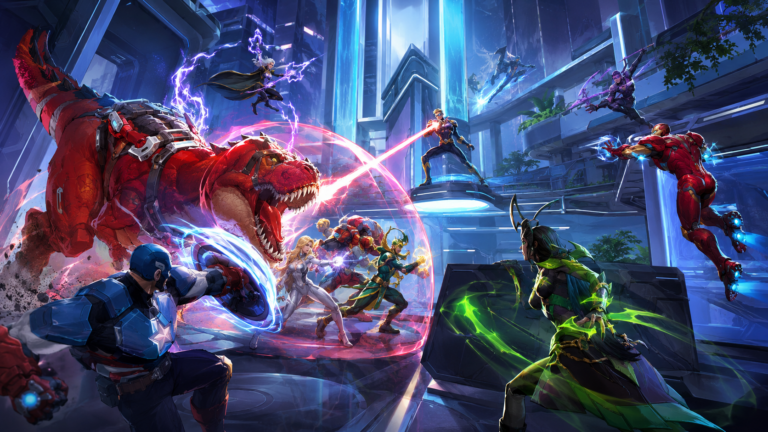

Think about what actually happens when you lose a ranked match in Marvel Rivals. You were one fight away from a win. Your team held the point for 90% of the round. Someone popped off at the wrong moment and it slipped. The defeat screen loads and there is already a pull toward queuing again, not because you feel good, but because the outcome felt so close. Next game, the variables might land differently. You almost had it.
That feeling has a name in psychology. It is called the near-miss effect, and it is the same mechanism that keeps someone at a slot machine well past the point of rational decision-making. The game did not manipulate you. The architecture of competitive play did. And that architecture was not invented by game designers , it was borrowed directly from casino psychology, refined over decades, and embedded so deeply into modern games that most players have stopped noticing it.
The Mechanics That Cross Over
Ranked systems in competitive games are near-miss machines by design. The SR bracket structure in Marvel Rivals, like every Elo-adjacent system, is calibrated to keep most players hovering just above or just below a rank threshold. That proximity is not accidental. A player at 45 points in Gold feels meaningfully closer to Platinum than one at 20 points does, even though both are technically the same rank. The system generates progress, then takes it back, then makes it feel retrievable.
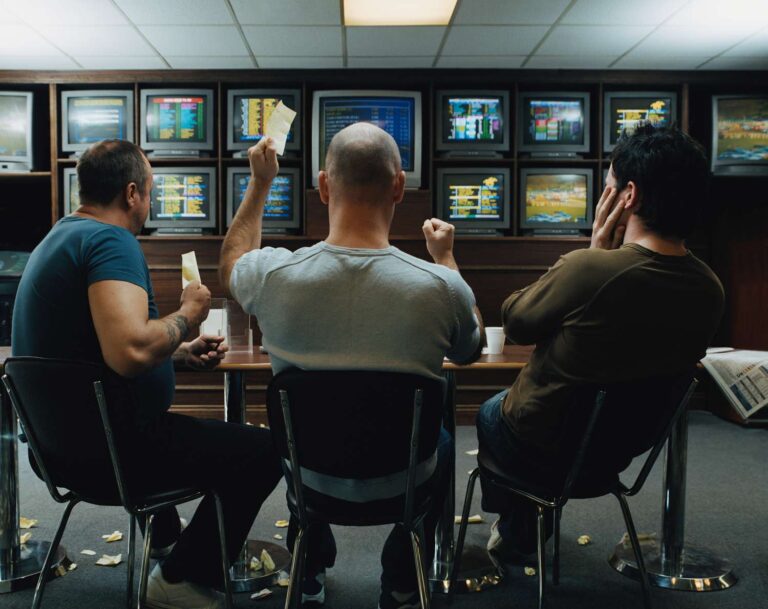
This is a variable ratio reinforcement schedule. B.F. Skinner identified it in the 1950s as the most resistant-to-extinction reward structure in behavioural psychology , meaning behaviour reinforced this way is the hardest to stop. Slot machines run on the same schedule. So do ranked queues. The reward (a rank-up, a win streak, a good game) comes at an unpredictable interval, which produces a higher and more sustained rate of engagement than any fixed reward structure could. The structural logic is not confined to ranked play. Take the gambling industry as an example, online slots games operate on the same variable ratio foundation: outcomes are uncertain, the feedback loop is fast, and the system is calibrated to make the next attempt feel like a meaningful one. The psychology is the same. The context is just different
Where the Audiences Actually Overlap
The demographic overlap between competitive gaming and casino products is real, though the framing often gets lazy. The argument is not that gaming leads to gambling in some linear pipeline , the research does not support that. What the research does suggest is that the same psychological profile tends to show up in both spaces.
Players who are drawn to high-variance competitive formats , games where individual rounds can swing wildly even between equally skilled opponents , tend to have a higher tolerance for outcome uncertainty than the general population. They have also spent thousands of hours training themselves to extract pattern-based decisions from chaotic, fast-moving situations. That is precisely the cognitive mode that casino games reward, particularly the ones with higher skill or strategy floors.
A 2018 study published in Nature Human Behaviour found loot box purchasing behaviour was significantly correlated with problem gambling scores, which suggests the populations are not cleanly separate. More recent research has continued to find that esports audiences show elevated gambling engagement compared to non-gaming demographics. The common thread is not the activity itself , it is a shared appetite for systems that require reading variance and acting under uncertainty.
What Game Design Borrowed From the Casino Floor
The direction of influence tends to get assumed rather than examined. Most coverage implies casino products are imitating games. The more defensible argument runs the other way.
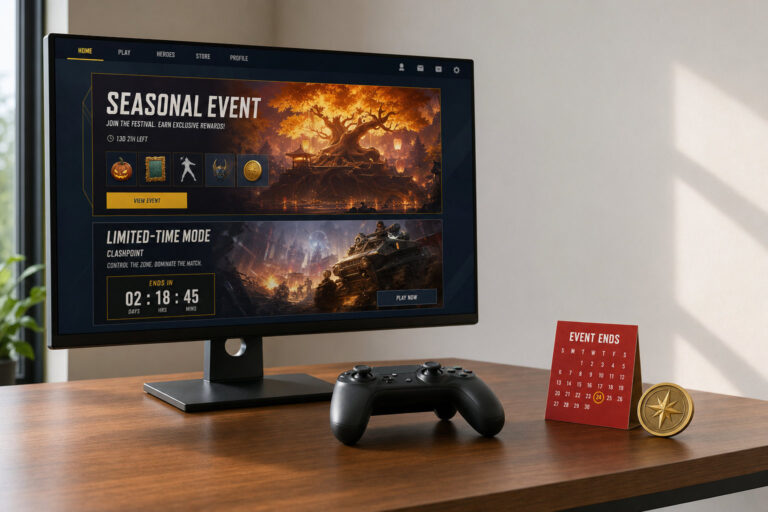
Modern live-service game design , battle passes, season rewards, daily login bonuses, ranked resets , is a direct descendant of casino retention mechanics. Daily login bonuses are a fixed interval reinforcement schedule, the same structure used by casinos to bring players back on a clock. Battle passes front-load visible progress early to create momentum, then slow it down in the middle tiers, then accelerate again at the end , a pacing structure designed to prevent abandonment at the frustration point, which is exactly what casino game designers call "the grind plateau."
The near-miss effect appears deliberately in both spaces. In slots it shows up as two matching symbols with the third just off-reel. In a competitive game it shows up as a ranked match that ends in a loss after your team peaked at 99% objective capture. Neither outcome was random. Both were shaped. NetEase did not invent this for Marvel Rivals specifically , it is industry-wide. But players who understand the competitive meta and track their winrate week-over-week are engaging with a system that was consciously designed to feel perpetually unfinished, in the same way a casino floor is designed to feel like the next hand might be the one that changes things.
Where the Lines Are Being Drawn
Belgium and the Netherlands banned paid loot boxes in 2018, classifying them as illegal gambling under existing frameworks. The enforcement record has been inconsistent , research found 82% of the top 100 grossing Belgian iPhone games were still generating revenue through randomised monetisation methods as recently as 2021. In October 2025, EU MEPs from the Internal Market and Consumer Protection Committee adopted a report urging the European Commission to address the inconsistency and ban loot boxes in games accessible to minors across member states. The UK took a different path. After a two-year inquiry it declined to bring loot boxes under gambling regulations, opting instead for industry self-regulation. The US has no federal position at all.
What the regulatory fragmentation reveals is that governments cannot agree on where the line sits between entertainment mechanics and gambling mechanics, partly because the industry has been careful to keep the line blurry. Cosmetics-only monetisation in some titles was a genuine concession. In others it was a repositioning exercise , the same compulsion loop, redesigned to avoid the specific criteria that triggered the Belgian ruling.
The honest version of this is that the overlap between competitive gaming and casino products is not a design accident or a moral failing. It is the predictable result of two industries solving for the same psychological objective: sustained engagement from people who find uncertainty more compelling than certainty. The players who understand that are navigating both spaces with more information than the ones who think the Venn diagram has nothing in it.